When More Trees Means Fewer Healthy Trees: The Case for Thinning Your Boulder Property
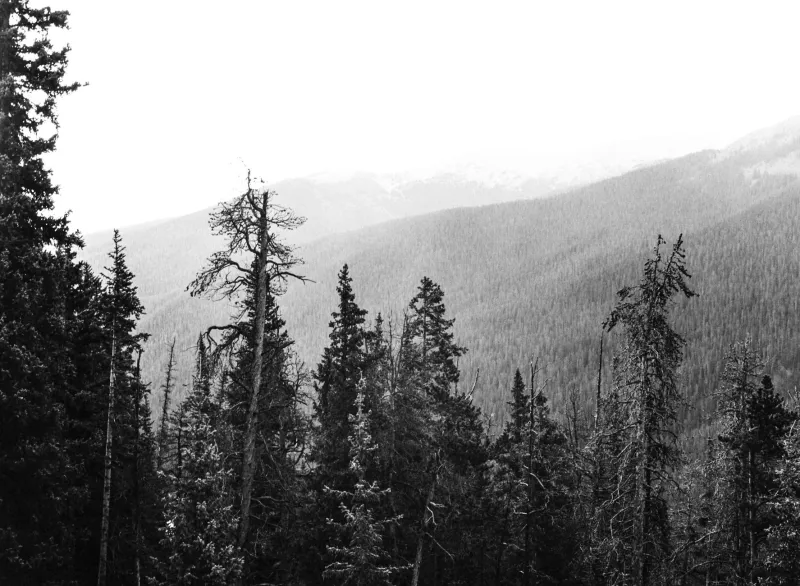
There's a particular kind of Boulder homeowner pride that comes with having a heavily wooded property. The shade, the privacy, the sense that your yard has somehow merged with the mountain landscape just to the west—it feels like you're doing something right. More trees equal more nature, and more nature is always better.
Except when it isn't.
Forest ecology has a concept called carrying capacity—the maximum number of trees a given area of land can support at full health. Push past that number, and the trees don't all thrive together. They compete. They stress. They weaken. And eventually, the overcrowding that felt like abundance starts looking like slow-motion decline across your entire canopy.
For Boulder homeowners with properties that include ponderosa pine, Douglas fir, or mixed conifer stands, this isn't a hypothetical. It's a condition that affects a significant number of yards in the foothills neighborhoods and even some denser urban lots where decades of growth have never been managed.
How Overcrowding Happens
It usually starts innocently enough. A property has a few trees when you move in. You plant a couple more. Natural seedlings establish themselves over the years and you let them grow because, well, why not? Meanwhile, the original trees are expanding their canopies and root systems. Twenty years later, what looked like a generously spaced grove has become a tight, competing cluster.
In Boulder's foothills zones, this process can happen without any human help at all. Ponderosa pine regenerates aggressively after disturbance, and without the periodic low-intensity fires that historically kept these stands thinned, tree density can reach levels that would never have existed in a naturally functioning forest.
The result is a stand where individual trees are significantly compromised even though the overall green mass looks impressive from the street.
Signs Your Property May Be Overstocked
You don't need a forestry degree to recognize the indicators of overcrowding. Here's what to look for:
Crown recession and dieback. When trees compete for light, lower branches die off first as the tree prioritizes resources toward its upper canopy. If you're seeing significant dead branch accumulation in the lower third of your trees, competition may be a contributing factor.
Thin, sparse canopies. Healthy ponderosa pines have full, rounded crowns. Trees under stress from competition often develop narrow, sparse canopies with limited needle coverage—sometimes called 'lion's tailing' when the foliage clusters only at branch tips.
Slow or stalled growth. Compare this year's new growth to photos from five years ago. If your trees aren't putting on meaningful new growth annually, they may be resource-limited.
Increased pest vulnerability. Mountain pine beetle and other bark beetles target stressed trees. A stand where multiple trees are showing beetle activity is often a stand where the underlying stressor is competition. Healthy, well-spaced trees produce enough resin to literally push beetles out; weakened trees can't keep up.
Dry, compacted soil with poor ground cover. Dense tree canopy intercepts rainfall before it reaches the ground, and aggressive root systems pull available moisture quickly. If the ground beneath your trees stays perpetually dry and bare, the stand may be extracting more than the site can sustainably provide.
The Fire Risk Dimension
This is a conversation Boulder homeowners need to have directly: overcrowded tree stands dramatically increase wildfire risk. This isn't alarmism—it's the consistent message from the Colorado State Forest Service, local fire departments, and wildfire mitigation specialists.
Dense stands provide continuous fuel ladders—pathways that allow a ground fire to climb into the forest canopy and become a far more destructive crown fire. They also create conditions where beetle-killed trees accumulate, adding dry, standing dead wood to an already elevated fuel load.
For properties in Boulder's Wildland Urban Interface zones—which includes a substantial portion of the foothills neighborhoods—defensible space requirements from local fire codes often mandate specific tree spacing and density standards. If you haven't checked whether your property meets current WUI guidelines, that's worth doing.
What Strategic Thinning Actually Looks Like
Forest thinning isn't about clearance. It's about selection. The goal is to identify which trees have the best structure, health, and long-term potential, then remove the competitors that are limiting their growth.
A good thinning plan for a Boulder property typically prioritizes:
- Removing trees that are already significantly stressed or in early decline
- Eliminating trees with structural defects that create hazard risk
- Reducing density to allow meaningful spacing between remaining crowns
- Creating variation in tree size and age rather than a monoculture of same-aged trees
- Improving sight lines and access to views without eliminating the wooded character of the property
The counterintuitive reality is that removing a third of the trees in an overcrowded stand often produces a noticeably healthier, more attractive result within just a few growing seasons. The remaining trees respond to reduced competition with measurably improved growth rates, fuller canopies, and better stress tolerance.
The View Factor (Yes, It Matters)
Beyond ecology, there's a practical quality-of-life dimension to thinning that Boulder homeowners consistently underestimate until they experience it. Dense, overcrowded stands block the mountain views that drew many people to their properties in the first place. They shade out gardens, patios, and lawn areas that could otherwise be functional outdoor living spaces.
Strategic thinning can restore views that have been incrementally blocked over decades of growth, often without sacrificing the sense of privacy and natural screening that makes a wooded property feel special. It's one of those rare situations where the ecologically correct action and the aesthetically desirable action are exactly the same thing.
Getting a Professional Assessment
If you're looking at your property and starting to wonder whether overcrowding is a factor in what you're seeing, the right first step is a professional evaluation. An ISA-certified arborist can assess your stand density, identify which trees are showing stress indicators, and put together a thinning recommendation that balances health, safety, fire risk, and the character of your property.
In Boulder, where trees are simultaneously beloved assets and genuine hazard risks, getting that assessment isn't an indulgence. It's just responsible ownership of the landscape you've got.