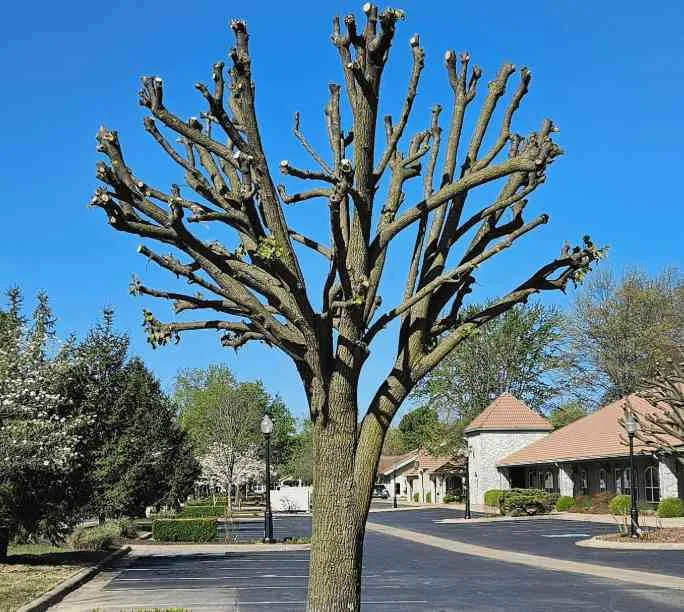
Why Your Arborist Keeps Recommending Branch Removal (And Why They're Right)
It's one of the most common conversations we have with Boulder homeowners. An arborist walks the property, points to a cluster of lower branches or a section of dead wood halfway up a pine, and recommends removal. The homeowner hesitates. "But those branches give us privacy." Or: "That dead section adds character." Or simply: "It doesn't look that bad to me."
We get it. Trees are a long-term investment, and removing parts of them feels like going backward. But the recommendations your arborist makes about dead wood and lower limb removal aren't aesthetic preferences—they're grounded in tree biology, structural mechanics, and genuine safety considerations. Here's what's actually behind those recommendations.
Dead Wood: More Than an Eyesore
Let's start with dead branches, because this is where homeowners most often push back. Dead wood can look dramatic and even beautiful in the right light. But from a tree health and safety standpoint, it's a problem that tends to get worse the longer it's left alone.
Structural failure risk is real and often unpredictable. Dead branches don't decay on a predictable schedule. A branch that looks stable can be harboring internal rot that compromises its attachment point at the trunk. In Boulder, where we get significant wind events, late-season snowstorms, and occasional ice loading, dead branches fail suddenly and without much warning. A branch that drops on a fence is annoying. One that drops on a car, a roof, or a person is a much bigger problem.
Dead wood is a disease and pest vector. In Colorado's tree ecosystem, this matters a lot. Dead and dying wood is prime real estate for bark beetles, which have devastated millions of trees across the state over the past two decades. A dead branch on an otherwise healthy tree is an open invitation. Removing it eliminates a potential entry point and reduces the risk of infestation spreading to living tissue. Fungal pathogens operate similarly—they colonize dead wood and can migrate into living cambium if left unchecked.
The longer you wait, the more it costs. Dead branches that are removed promptly are a straightforward pruning job. Dead branches that have been left for years may involve decay that has spread to the main stem, making the work more complex and more expensive—or in some cases, compromising the tree's long-term viability.
The Case for Lower Limb Removal
This one generates more emotional resistance than dead wood removal, because lower branches are visible, tangible, and often feel like part of the tree's character. But arborists recommend lower limb removal—a process sometimes called crown raising or limbing up—for reasons that go well beyond aesthetics.
Low branches are structurally vulnerable. The lowest limbs on a tree are often the oldest and, paradoxically, the weakest. As a tree grows upward, lower branches receive less light and produce less energy through photosynthesis. The tree gradually reduces its investment in them. This means lower limbs are often the first to show signs of stress, disease, or structural weakness—and the first to fail in a storm.
They create clearance and safety issues. In a residential Boulder yard, low-hanging branches over driveways, walkways, patios, and play areas create ongoing hazards. Beyond the obvious head-height concerns, low branches that drag on rooflines or contact structures create moisture pathways and abrasion damage that can compromise both the tree and the building.
They invite pest and disease problems at ground level. Branches that hang close to the soil can transfer soil-borne pathogens to the tree, allow ground-dwelling insects easier access to the canopy, and create humid microclimates near the trunk that promote fungal growth. Raising the crown improves airflow at the base of the tree, which reduces these risks meaningfully.
Fire mitigation is a serious consideration in Boulder County. This is something that distinguishes arborist work in the Front Range from almost anywhere else in the country. Boulder County's wildfire risk is well-documented, and low-hanging branches that create a continuous fuel ladder from the ground to the upper canopy are a recognized fire hazard. Many Boulder homeowners are required by county guidelines or HOA rules to maintain specific clearance heights for trees near structures. Your arborist isn't just recommending this for tree health—they may be helping you meet real regulatory requirements.
Crown Cleaning vs. DIY Pruning: Why It's Not the Same Thing
Professional crown cleaning—a comprehensive process that includes dead wood removal, crossing branch elimination, and selective thinning—is a precise, methodical procedure. It's not the same as going after your tree with a pole saw on a Saturday afternoon, and the difference matters.
Here's what a certified arborist does differently:
- They evaluate the whole tree before making any cuts. Every branch removal affects the tree's balance, structure, and growth patterns. A good arborist has a plan before the first cut is made.
- They make proper pruning cuts. The location and angle of each cut determines whether the tree can close the wound effectively. Improper cuts—too close to the trunk, too far out, or at the wrong angle—create chronic wound sites that don't heal and become entry points for decay and disease.
- They know what to leave. Removing too much live material in a single pruning session stresses the tree significantly. The general rule is no more than 25% of live crown in a single visit, but that threshold requires judgment about the specific tree's condition, species, and environment.
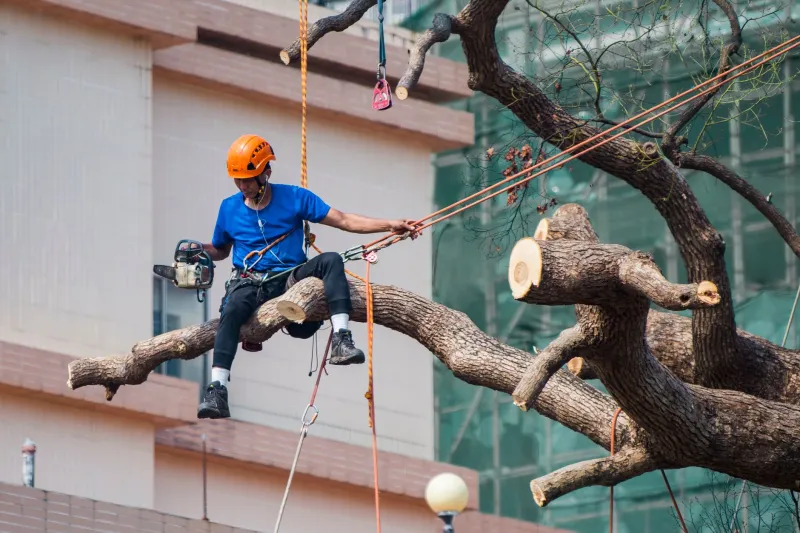
- They have the right equipment and training to work safely. This is especially relevant for larger trees, upper canopy work, or anything near power lines. Falls from trees are a leading cause of serious injury in DIY home maintenance. It's not worth the risk.
What to Expect from Professional Work
If you're scheduling a crown cleaning or lower limb removal with a Boulder arborist, here's a basic sense of what the process looks like:
The arborist will do a ground-level and sometimes aerial assessment of the tree before starting. They'll discuss what they're recommending and why—and a good arborist will welcome your questions rather than brush them off. The actual work typically takes anywhere from one to several hours depending on tree size and the scope of work. Debris is usually chipped on-site or hauled away depending on your preference and the service agreement.
Costs vary significantly based on tree size, access, and scope. For a single mature tree, budget $250–$700 for a thorough crown cleaning. Lower limb removal on a smaller tree might run $150–$300. These aren't trivial numbers, but they're considerably less than the cost of emergency removal after a branch failure—or the liability exposure if that branch lands somewhere it shouldn't.
The Bottom Line
Your arborist isn't recommending branch removal because they enjoy taking things away from your yard. They're recommending it because they can see what's happening structurally and biologically in ways that aren't obvious from ground level. Dead wood and vulnerable lower limbs are genuinely risky in Boulder's climate—between the wind events, the snow loads, and the wildfire considerations, the consequences of deferred pruning here are higher than in many other parts of the country.
Trust the recommendation. Ask for the explanation if you want it—any certified arborist should be able to walk you through the reasoning clearly. Then let them do the work properly. Your trees will be healthier, safer, and frankly better-looking for it.