Aspen Gold and Maple Red Come at a Price: What Boulder Homeowners Actually Spend on Fall Color Trees
Every October, Boulder turns into something out of a nature documentary. The Flatirons backdrop, the crisp air, the explosions of gold and crimson across neighborhood yards—it's genuinely hard to beat. But if you've ever planted an aspen or a maple expecting that show to just happen on autopilot, you've probably already discovered the hard way that it doesn't.
Fall color trees are high-reward, but they're also high-maintenance. And at Boulder's elevation, the challenges are a little different than what you'd find on the Front Range or down in Denver. Let's break down which trees actually deliver reliable fall color here, what they need to stay healthy, and what you should realistically budget for their care.
Which Trees Actually Perform at Boulder's Elevation
First things first—not every tree that looks gorgeous in a nursery catalog is going to thrive at 5,400 feet. Boulder sits in a zone that's simultaneously semi-arid, UV-intense, and subject to wild temperature swings. That combination eliminates a lot of candidates right off the bat.
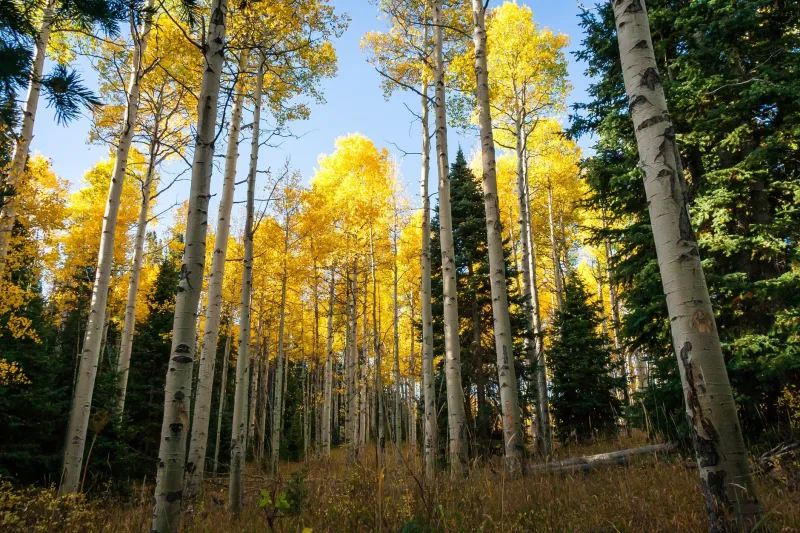
Quaking Aspens (Populus tremuloides) are the obvious local favorite. They're native, they're stunning in fall, and they grow fast. The catch? They're also prone to a laundry list of problems including fungal cankers, cytospora canker, leaf scorch, and root suckering that can take over a yard if left unchecked. They want consistent moisture but hate waterlogged soil. Getting that balance right in Boulder's dry climate takes real effort.
Rocky Mountain Maple (Acer glabrum) is a smaller, underappreciated gem that does surprisingly well at our elevation. It won't give you the towering canopy of an eastern sugar maple, but the fall color is legitimate—deep oranges and reds—and it's far more drought-tolerant once established.
Autumn Blaze Maple is popular in Boulder neighborhoods and delivers reliable red color, but it's a hybrid that needs more supplemental water than many homeowners expect, especially through our dry falls. It also benefits from annual fertilization to maintain that vivid color performance.
Ornamental Pears like the Cleveland Select variety show up in a lot of Boulder yards and deliver solid fall color, but they're increasingly flagged by arborists for structural issues as they age. Worth knowing before you plant a row of them.
The Nutritional Reality of Fall Color Trees
Here's something most homeowners don't realize: fall color intensity is directly tied to a tree's nutritional health. A stressed, nutrient-deficient tree will produce dull, patchy color—or drop its leaves early before they even turn. That's not a climate issue. That's a care issue.
For aspens and maples specifically, a few things matter most:
- Phosphorus and potassium support the anthocyanin production that drives red and orange tones. If your soil is depleted in these, your maples will underperform.
- Iron and manganese availability drops in high-pH soils, which Boulder has in abundance. Yellowing leaves (chlorosis) is a common sign your tree isn't absorbing what it needs, even if those nutrients are technically present in the soil.
- Deep root fertilization in late spring or early fall—where nutrients are injected directly into the root zone under pressure—is far more effective than spreading granular fertilizer on the surface. Surface applications in clay-heavy or compacted Boulder soils often don't reach the roots at all.
Plan to spend $150–$350 per tree annually for professional fertilization, depending on tree size and the specific treatment approach. That's not a luxury—for fall color trees, it's genuinely part of the maintenance equation.
Watering Strategies That Actually Work
Boulder averages around 20 inches of precipitation per year, but a significant chunk of that falls as snow in winter and spring. By late summer and fall—exactly when your trees are preparing for their color display—conditions are often dry. That timing is a problem.
Aspens in particular are shallow-rooted and will show stress quickly when soil moisture drops. Maples are somewhat more forgiving but still benefit from deep, infrequent watering through late summer rather than frequent shallow watering that never reaches the root zone.
A good rule of thumb: water fall color trees deeply every 7–10 days in August and September if you're not getting meaningful rainfall. Use a soaker hose or drip system placed at the drip line (the outer edge of the canopy), not at the trunk. You're trying to reach roots that extend outward, not downward directly beneath the tree.
If you're running an irrigation system, check that your fall watering schedule actually accounts for tree needs—most systems are programmed for lawn coverage, which isn't the same thing.
Pruning for Performance, Not Just Appearance
There's a direct connection between smart pruning and fall color quality that most homeowners never hear about. Here's the basic logic: a tree with a crowded, crossing canopy is a tree that's spending energy inefficiently. Competing branches create wound sites, block airflow, and increase disease pressure—all of which reduce the tree's overall vitality and, by extension, its color performance.
For aspens, arborists typically recommend:
- Removing dead, damaged, or crossing branches every 2–3 years
- Thinning the canopy to improve light penetration and air circulation
- Managing root suckers aggressively if you don't want an aspen grove taking over your lawn (and trust us, you don't want that unless you planned for it)
For maples, crown cleaning and structural pruning every 3–5 years is usually sufficient, though younger trees benefit from more frequent shaping to establish good branch architecture early.
Pruning costs in Boulder typically run $200–$600+ depending on tree size and complexity. It's tempting to push this off, but deferred pruning almost always costs more in the long run—both financially and in terms of tree health.
Budgeting for the Long Game
If you want honest numbers, here's a rough annual maintenance budget per mature fall color tree in Boulder:
- Deep root fertilization: $150–$350
- Supplemental watering (if not on irrigation): variable, but factor in time and water costs
- Pruning (amortized annually): $60–$150
- Pest and disease monitoring: often included in a service contract, or $75–$150 per visit if needed
For a yard with three to five aspens or maples, you're looking at a realistic annual investment of $500–$1,500 to keep them genuinely healthy and visually impressive.
Is it worth it? That depends on what you want from your yard. But if you planted these trees expecting a free show, now you know what's actually behind the curtain. The good news is that with the right care, Boulder's fall color trees can perform beautifully for decades. They just need a little help getting there.