Think Twice Before You Chainsaw: The Real Price of DIY Tree Removal in Boulder
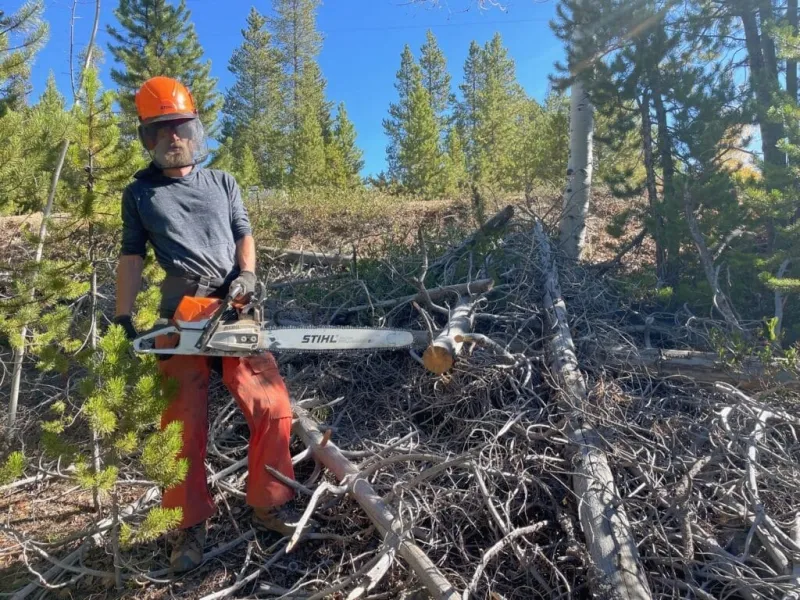
Photo: professional arborist removing large pine tree on steep hillside Colorado, via bearclawlandservices.com
We get it. You've watched a few YouTube videos, you've got a decent chainsaw in the garage, and the quote from a tree service made your jaw drop. Pulling out that tree yourself sounds like a totally reasonable Saturday plan — until it isn't.
Boulder's terrain is gorgeous, but it's also unforgiving. Steep hillsides, rocky soil, mature ponderosa pines that have been growing for 80 years — this isn't suburban Kansas where a small ornamental tree falls cleanly into an open lawn. Around here, DIY tree removal has a way of turning into something much more expensive, much more dangerous, and occasionally much more embarrassing than homeowners anticipate.
Let's break down where the hidden costs actually live.
The Equipment Trap
First stop: the hardware store rental counter. A basic chainsaw rental might run you $50–$80 for the day. But that's rarely all you need. Removing a large tree — say, a 60-foot pine on a slope — typically requires a bucket truck or aerial lift, which can cost $300–$600 per day just to rent. Add in rigging equipment, wedges, a wood chipper for debris, and personal protective gear (helmet, chainsaw chaps, steel-toed boots), and you're already looking at several hundred dollars before you've made a single cut.
Professional arborists own this equipment outright and use it every single day. Their crews know exactly how to position a lift on uneven ground, how to rig a limb so it falls where they intend, and how to feed a chipper without losing fingers. You're not just paying for labor when you hire a pro — you're paying for years of muscle memory that equipment alone can't buy.
Boulder's Terrain Is Not Your Friend
Flat yard? Lucky you. But a huge percentage of Boulder properties sit on slopes, back up to open space, or have mature trees growing at odd angles thanks to years of wind and gravity. That changes everything about how a tree falls.
A tree on a hillside doesn't behave the way a tree on level ground does. The weight distribution is different, the anchor points are different, and the margin for error is dramatically smaller. Misjudge the lean by a few degrees and you're looking at a tree through your living room window — literally.
We've responded to calls from homeowners who attempted removal on sloped terrain and ended up with a tree on their roof, a crushed fence, or a slide of debris that damaged a neighbor's property. One family in the Chautauqua neighborhood found out the hard way that their homeowner's insurance wouldn't cover damage caused by their own negligence during an unpermitted removal. The resulting out-of-pocket repairs cost four times what a professional quote would have been.
The Injury Math Is Brutal
Treework consistently ranks among the most dangerous occupations in the United States. The combination of height, heavy equipment, falling wood, and unpredictable physics makes it genuinely hazardous even for trained professionals.
For untrained homeowners, the risks multiply fast. Kickback from a chainsaw is the leading cause of serious lacerations in amateur cutting accidents. A limb that appears secure can drop without warning. Footing on Boulder's rocky, root-covered terrain is treacherous, especially when you're looking up and managing a running saw.
An emergency room visit in Colorado averages around $2,500 just for the facility fee — before treatment. A serious hand or leg injury can mean surgery, rehabilitation, and weeks of missed work. When you stack those potential costs against a professional removal quote, the "savings" evaporate almost immediately.
Permits, Utilities, and the Stuff Nobody Thinks About
Boulder has specific rules about tree removal, particularly for trees above a certain diameter or on properties near open space buffers. Removing a protected tree without the proper permits can result in fines and, in some cases, requirements to replant at your own expense.
Then there are utilities. Underground gas lines, irrigation systems, and buried electrical conduits don't announce themselves. A stump grinder in the wrong spot can cause thousands in damage and create genuine safety hazards. Professional arborists know to call 811 before any ground work — a step many DIYers skip entirely.
What Improper Removal Does to Your Land
Here's the part that doesn't show up in any immediate bill: the long-term ecological damage that bad removal technique leaves behind.
Leaving a stump untreated invites bark beetles, fungal rot, and root diseases that can spread to neighboring trees. Improper cuts on surrounding trees during the removal process create wounds that never heal correctly, making those trees vulnerable for years. And in Boulder's fire-prone environment, a pile of improperly disposed slash left on your property is both a hazard and a code violation.
Professional arborists don't just remove a tree — they manage the whole ecosystem around it. They know how to protect root systems of adjacent trees, how to treat stumps to prevent regrowth and disease, and how to dispose of material in ways that comply with local regulations.
So When Does DIY Make Sense?
Honestly? Small stuff. Removing a young, thin sapling in an open area with no overhead hazards and no slope? You can probably handle that. Cleaning up some downed branches after a storm? Sure, with proper safety gear.
But anything involving a mature tree, a chainsaw, height above your head, or proximity to structures or utilities? That's where the professional call is worth every penny. Get a few quotes, ask about their credentials (look for ISA Certified Arborists), and factor in what you're actually risking before you fire up that chainsaw.
Your Saturday is worth more than a trip to the ER. And your roof definitely is.